
Louisville has a complicated relationship with water. Sitting along the banks of the Ohio River, this city has weathered some of the most dramatic flooding events in American history. Louisville continues to face real flood risk today. Yet when most homeowners think about their insurance coverage, flood protection rarely comes to mind.
So who actually needs flood insurance in Louisville? The short answer might surprise you: probably more people than you think.
Louisville’s Flood History Is No Joke
To understand why flood insurance matters here, it helps to know what Louisville has been through.
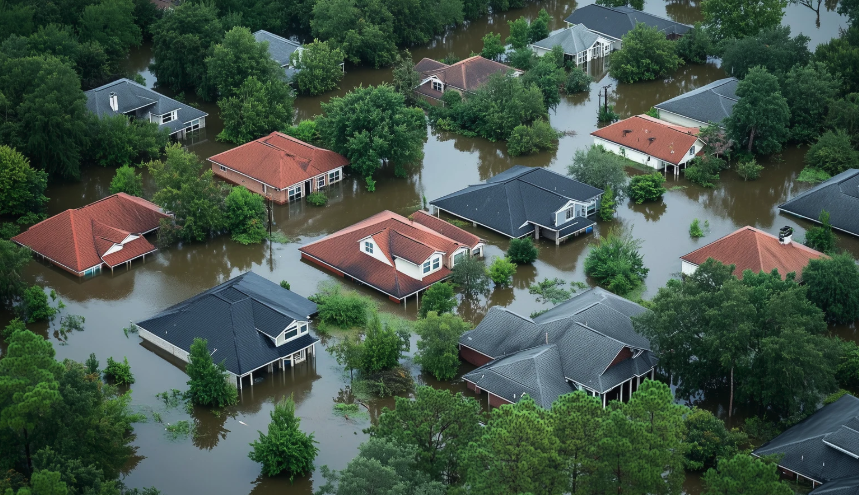
The Great Flood of 1937 remains the benchmark. That January, nearly 20 inches of rain fell on the city in less than a month. The Ohio River crested at over 57 feet — roughly 40 feet above its normal level — and approximately 70% of Louisville was submerged, forcing more than 175,000 residents from their homes. The disaster prompted the construction of the Ohio River Flood Protection System, a 29-mile floodwall that took nearly 40 years to complete.
But the floodwall doesn’t make Louisville flood-proof. In 1997, record rainfall caused another catastrophic event — the Ohio River crested at nearly 71 feet in the Louisville area, closing Interstates 64 and 65 and affecting around 50,000 homes in the metro area. And as recently as April 2025, the Ohio River crested at over 36 feet near downtown Louisville. This ranked among the top-10 worst floods in the city’s history.
Flooding isn’t a relic of Louisville’s past. It’s an ongoing reality.
Three Types of Flood Risk in Louisville
According to the Louisville Metropolitan Sewer District (MSD), flooding in the area comes from three distinct sources:
1. Ohio River flooding — The most historically dramatic form, where the river overflows its banks and inundates low-lying areas, particularly along River Road and neighborhoods close to the waterfront.
2. Flash flooding from interior streams — Creeks and streams throughout Jefferson County can rise rapidly during heavy rain events, affecting neighborhoods that have no direct connection to the Ohio River.
3. Overloaded storm systems — Even neighborhoods with no nearby waterways can experience flooding when storm drains and sewer systems are overwhelmed by intense rainfall. Kentucky can experience storms that produce as much as four inches of rain per hour, making this a very real risk across the city.
This three-pronged threat is exactly why location alone doesn’t tell the whole story of your flood risk.
Who Is Required to Have Flood Insurance?
If you have a federally backed mortgage and your home is located in a high-risk flood zone (designated by FEMA as a Special Flood Hazard Area, or SFHA), your lender is required by law to make you purchase flood insurance. These are the zones you’ll see labeled Zone A or Zone AE on FEMA’s Flood Insurance Rate Maps (FIRMs).
Lenders, insurance agents, and local governments use FEMA Flood Insurance Rate Maps as the official tool to assess flood risk. Louisville Metro participates in the National Flood Insurance Program (NFIP), and MSD maintains and enforces the local Floodplain Management Ordinance.
You can look up any property in Jefferson County using the Louisville MSD Floodplain Determination Tool or verify your zone at the FEMA Flood Map Service Center.
Who Should Have Flood Insurance (Even If It’s Not Required)?
Here’s where many Louisville homeowners get it wrong: being outside a high-risk flood zone does not mean you are safe from flooding. My home, for example, is not in a flood zone. This picture is my basement after a torrential storm.
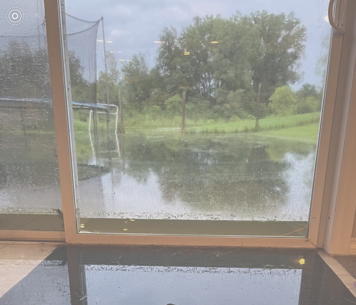
FEMA estimates that roughly 25% of all flood insurance claims come from properties outside of designated high-risk flood zones. Lower-risk zones still carry some flood probability — they’re simply less likely, not impossible. And given the flash flooding patterns across Louisville’s interior neighborhoods, moderate-risk designations can still translate to real-world damage.
There are a few groups in particular who should strongly consider flood coverage even without a lender requirement:
- Homeowners near creeks, streams, or low-lying areas throughout Jefferson County, regardless of their official zone designation
- Homeowners in older neighborhoods where storm infrastructure may not handle today’s extreme rain events
- Anyone who has experienced water intrusion in their basement — even from a single storm
- Renters — your landlord’s policy covers the building, not your belongings. A contents-only flood policy can protect your furniture, electronics, and other personal property
- Homeowners who recently paid off their mortgage, removing the lender requirement but not the underlying risk
What Flood Insurance Actually Covers
It’s important to understand that standard homeowners insurance does not cover flood damage. If a storm floods your basement or a creek overflows into your living room, your regular policy will not pay for it.
Flood insurance is available through two main channels: the federally backed National Flood Insurance Program (NFIP) and private flood insurance carriers.
NFIP policies offer two types of coverage:
- Building coverage — Protects your home’s structure, electrical and plumbing systems, HVAC equipment, and built-in appliances. The NFIP caps building coverage at $250,000 for residential properties.
- Contents coverage — Protects your personal belongings such as furniture, clothing, electronics, and valuables. You purchase this separately from building coverage and it has its own limits.
For homeowners who need coverage beyond NFIP limits — or who want additional flexibility — private flood insurance can be a strong option worth exploring.
Good News: Louisville Residents May Qualify for Discounts
Here’s something most Louisville homeowners don’t know: because Louisville Metro participates in FEMA’s Community Rating System (CRS) and has achieved a Class 3 Rating, residents in the community may qualify for up to a 35% discount on NFIP flood insurance premiums. That’s a meaningful savings that makes flood coverage even more accessible.
How to Find Out Your Actual Risk
The best first step is checking your property’s flood zone designation. You can do this through:
- The Louisville MSD Floodplain Determination Tool (for Jefferson County properties)
- The Kentucky Flood Hazard Portal
- The FEMA Flood Map Service Center at msc.fema.gov
Keep in mind that flood maps are updated periodically, and your zone designation may have changed. If your property’s elevation can be documented above the Base Flood Elevation, you may be eligible for reclassification through FEMA’s Letter of Map Amendment (LOMA) process, which could remove a mandatory coverage requirement.
The Bottom Line
In Louisville, flood risk does not limit itself to riverfront properties or flood-mapped zones.. Between the Ohio River, the city’s many interior waterways, and the intensity of Kentucky storm events, flooding can reach communities that have historically felt safe.
The question isn’t really who needs flood insurance — it’s who can afford not to have it. A single flooding event can cause tens of thousands of dollars in damage. Without a separate flood policy, that bill falls entirely on you.
At Aspen Ridge Insurance, we help Louisville-area homeowners understand their actual flood exposure and find coverage that fits their situation — whether that’s an NFIP policy, a private market option, or a combination of both.
Ready to find out where you stand? Contact us today for a flood insurance review.