
Potholes, they are everywhere! If you’ve ever felt that stomach-dropping thud of your tire sinking into a deep road crater, you know the immediate fear that follows: How bad is the pothole damage, and who’s going to pay for it?
The good news is that your auto insurance may cover pothole damage — but the answer depends on the type of coverage you carry. Here’s what every driver needs to know.
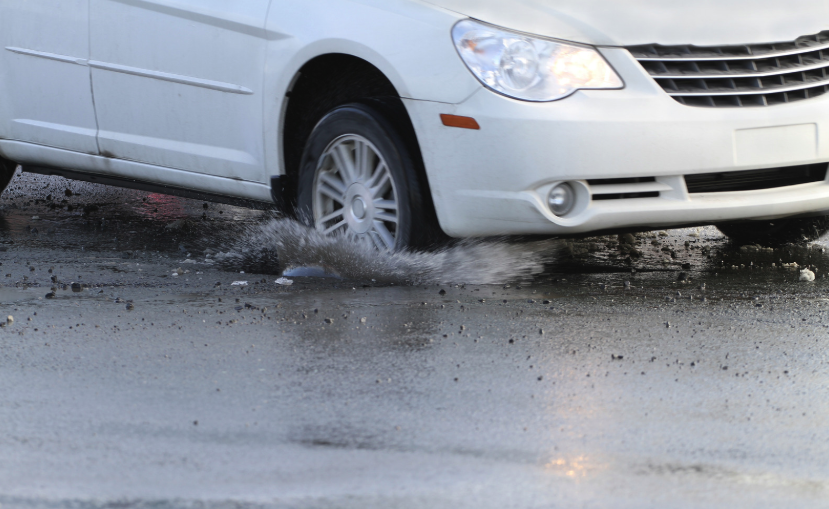
The Scope of the Problem
Potholes aren’t just a minor inconvenience. According to the American Automobile Association (AAA), pothole damage has cost U.S. drivers approximately $26 billion annually, with nearly 16 million drivers suffering vehicle damage from potholes over a recent five-year span. In some regions — particularly the Northeast — the problem is even worse, with tire repair rates running 60% higher than in the South and West.
The most common types of damage include:
- Tires — punctures, sidewall bulges, and blowouts
- Wheels/Rims — bending or cracking (a single cracked wheel can cost $300–$400 to replace)
- Suspension — one of the costlier repairs, averaging around $2,000 per incident
- Steering and alignment — even a minor hit can knock your vehicle out of alignment
- Exhaust systems — damage from bottoming out in a deep pothole
Which Type of Insurance Covers Pothole Damage?
Collision Coverage — Your Primary Protection
The coverage that applies to pothole damage is collision coverage. According to the Insurance Information Institute (III), collision coverage “covers damage to a car resulting from a collision with an object (e.g., a pothole, lamp post or guard rail), another car, or as the result of flipping over.”
Collision coverage is optional — it is not required by law in any state. However, if you financed or leased your vehicle, your lender almost certainly requires you to carry it.
How it works: When you file a pothole damage claim under collision coverage, you first pay your deductible. If your deductible is $500 and the repairs cost $800, your insurance pays $300. If repairs cost less than your deductible, filing a claim doesn’t make financial sense — you’d be paying out of pocket either way, and a filed claim can affect your premium.
Comprehensive Coverage — Does Not Apply
Comprehensive coverage handles events like theft, vandalism, flooding, and fallen objects. It does not cover pothole damage, since hitting a pothole is classified as a collision event, not a non-collision incident.
Liability Coverage — Indirect Relevance
If you swerve to avoid a pothole and strike another vehicle, your liability insurance would cover damage to the other driver’s car and any injuries. Liability coverage is required in nearly every state, but it won’t pay for damage to your own vehicle.
Should You File a Claim for Pothole Damage?
Not always. Before calling your insurance company, consider:
1. Compare repair costs to your deductible. If your deductible is $1,000 and the alignment fix costs $250, pay out of pocket. Filing a claim for less than your deductible gains you nothing and could raise your rates.
2. Think about your claims history. Multiple claims in a short period can lead to higher premiums or, in some cases, non-renewal. Minor pothole damage may be worth absorbing if you’ve recently filed other claims.
3. Document everything first. Before deciding, get a repair estimate from a qualified mechanic. Photograph the damage and, if possible, photograph the pothole itself along with its location.
What to Do Immediately After Hitting a Pothole
Pull over safely and assess your tires. Do not drive on a visibly damaged or flat tire.
- Look for warning signs — pulling to one side, vibrating steering wheel, unusual noises, or low tire pressure warning lights.
- Document the scene. Photograph the pothole, your vehicle’s damage, and note the exact location and time.
- Get a mechanic’s inspection. Even if nothing looks obviously wrong, suspension and alignment issues aren’t always visible.
- Contact your insurance agent if repair costs exceed your deductible.
The Bottom Line
Pothole damage is covered by auto insurance — but only if you carry collision coverage. If you’re driving with liability-only insurance, you’re on your own for any vehicle damage potholes cause.
At Aspen Ridge Insurance, we help drivers find the right balance of coverage for their needs and budget. Whether you’re unsure what your current policy covers or you’re ready to explore adding collision coverage, our team is here to help.
Contact Aspen Ridge Insurance today to review your policy and make sure you’re protected before the next pothole finds you.