
Spring weather, in the mid-west, is unpredictable
If you’ve lived in Kentucky for any length of time, you already know the weather here doesn’t pull its punches. Tornadoes, severe thunderstorms, damaging hailstorms; the Bluegrass State sees it all, and often with little warning. For homeowners, that raises an important question. When a storm rolls through and damages your roof or smashes your windows, will your home insurance have your back? Are high winds or hail damage covered?
The short answer is: usually yes — but there are important details every Kentucky homeowner needs to understand before a storm hits, not after.

Wind & Hail Are Typically Covered Perils
Most standard homeowners insurance policies include wind and hail as “covered perils,” meaning damage caused by these events is eligible for a claim. A standard Kentucky homeowners policy “typically includes fire, lightning, wind, and hail” as covered events under your dwelling coverage.
That’s good news. But the devil — as always — is in the details.
What Wind & Hail Coverage Actually Pays For
After a windstorm or hailstorm damages your home, your policy’s dwelling coverage kicks in to help you repair or rebuild the structure. This includes:
- Roof damage — the most common wind and hail claim in Kentucky
- Siding damage from hail impact
- Window and door damage from wind pressure or flying debris
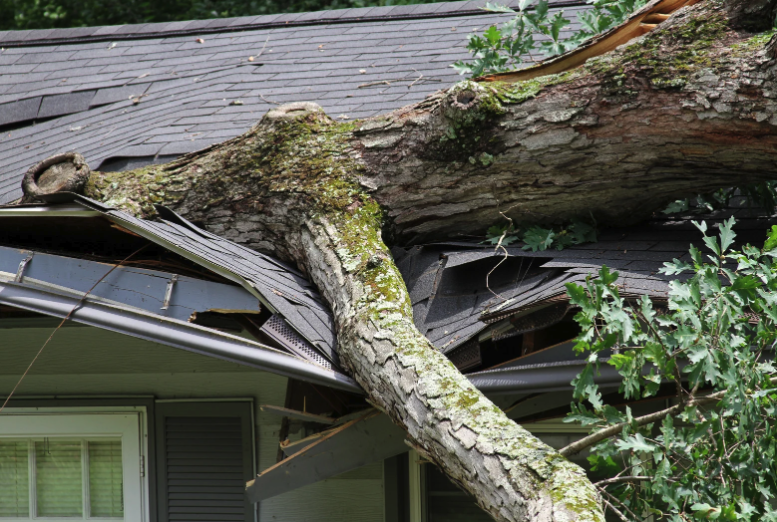
- Structural damage from fallen trees or debris
Your policy will also cover personal property inside your home if the storm damages it. This would include a tree limb punching through the roof and ruining furniture or water damage from a leaky roof. Additional Living Expenses care also covered if the damage is severe enough that you need to temporarily relocate while your home is being repaired.
The Wind & Hail Deductible — What Homeowners May Miss
Many policies now include a separate wind and hail deductible that is distinct from your standard “all-peril” deductible.
The Kentucky Department of Insurance notes that “some insurance policies have a special deductible for losses caused by wind, hurricanes, or other types of storms.”
The company structures the wind/hail deductible two ways:
- A flat dollar amount (e.g., $2,500)
- A percentage of your dwelling coverage (e.g., 1% or 2% of your insured home value)
That second option catches many homeowners off guard. If your home is insured for $300,000 and you have a 2% wind/hail deductible, you’re responsible for the first $6,000 of any storm-related claim — even if your standard deductible is only $1,000.
Pro Tip: Pull out your policy declarations page and look for a separate wind/hail deductible listed alongside your standard deductible. If you’re not sure what you have, give us a call — we’re happy to review it with you. At Aspen Ridge Insurance, we will specifically spell out your “all perils” deductible and your “wind and hail” deductible, if they are different.

Roof Age Matters More Than You Think
Insurance companies do not treat all roofs equally. Older roofs may only qualify for Actual Cash Value (ACV) coverage. This means the insurer pays what your damaged roof was worth at the time of loss, after accounting for depreciation. A 15-year-old roof that cost $12,000 new might only net you $4,000–$5,000 under ACV.
Replacement Cost Value (RCV) coverage, on the other hand, pays to replace what was damaged with new materials at today’s prices — regardless of your roof’s age at the time of loss. Newer roofs typically qualify for RCV.
When reviewing your coverage, make sure you know which type of roof coverage you have. At the time a policy is first issued, or at renewal, Aspen Ridge will review your wind and hail coverage to make sure you understand the coverage that you have.
What’s NOT Covered
Even the best standard homeowners policy has limits. Here’s what wind and hail coverage typically won’t include:
- Flood damage — Even if a storm causes flooding, you must obtain a separate flood insurance policy through the National Flood Insurance Program (NFIP) to cover flood damage.
- Gradual deterioration — if your roof was already worn down or improperly maintained, insurers may deny part or all of a claim.
- Earthquake damage — also requires a separate policy.
- Vehicle damage — damage to your car from hail or wind requires comprehensive auto coverage, not your homeowners policy. However, if you bundle your home and auto, you may only have to pay one deductible if the same storm damages both your home and vehicles.
Kentucky Premiums Are Rising — Here’s Why
Kentucky homeowners are paying more for insurance than the national average, and storm risk is a major reason. According to Lex18, the average annual homeowners insurance premium in Kentucky now runs between $3,326 and $3,540 for $300,000 in dwelling coverage — roughly 38–46% above the national average.
The state’s exposure to tornadoes, severe hailstorms, and ice storms drives losses that insurers price into every policy. That doesn’t mean you’re stuck paying too much, though — You can your home and auto policies, update an older roof, and work with an independent agent to shop coverage options can all make a meaningful difference.
A New Kentucky Law Could Save You Money
In early 2026, a new Kentucky law took effect requiring insurers to offer discounts to homeowners with FORTIFIED-certified roofs — a program developed to help homes better withstand wind, hail, and storm damage. Certified homes are significantly less likely to sustain major storm damage, and the premium discounts can range from 15–30% on homeowners premiums. If you’re planning a roof replacement, it may be worth looking into FORTIFIED certification before you reroof. At Aspen Ridge Insurance, we will send a “Life Changes Survey” each year at renewal. This will let us know if you have a new roof which could save on your homeowners insurance.
What to Do After Wind or Hail Damage
If your home takes storm damage, act quickly and follow these steps:
- Document everything — take photos and video of all damage before any cleanup or temporary repairs.
- Prevent further damage — cover holes in the roof with a tarp, board broken windows. Most policies require this to avoid coverage denial on secondary damage. Save any receipts for these purchases since you can add the cost of these items to your claim.
- Contact your insurance agent or company — report the claim as soon as possible and ask for your claim number and expected timeline for an adjuster visit.
- Get independent estimates — You can obtain your own contractor estimates.. Don’t feel pressured to accept an initial settlement that seems low.
- Know your rights — if you haven’t heard from your insurer within three days of filing, contact the Kentucky Department of Insurance Consumer Protection Division at 800-595-6053.
The Bottom Line
Wind and hail coverage is a critical part of any Kentucky homeowner’s insurance policy, but the details — separate deductibles, ACV vs. RCV roof coverage, and coverage exclusions — can significantly affect how much you actually receive after a claim. Don’t wait until a storm has already done damage to find out what you’re working with.
At Aspen Ridge Insurance, we help Kentucky homeowners review their current coverage, identify gaps, and find the right protection at a competitive price. Reach out to us today — before storm season puts your home to the test.
Reach out today for a free, no-obligation insurance review. We are always happy to assist!